Rugs · 12 min read
How to Clean an Area Rug at Home (Without Ruining It)
 Donald Martin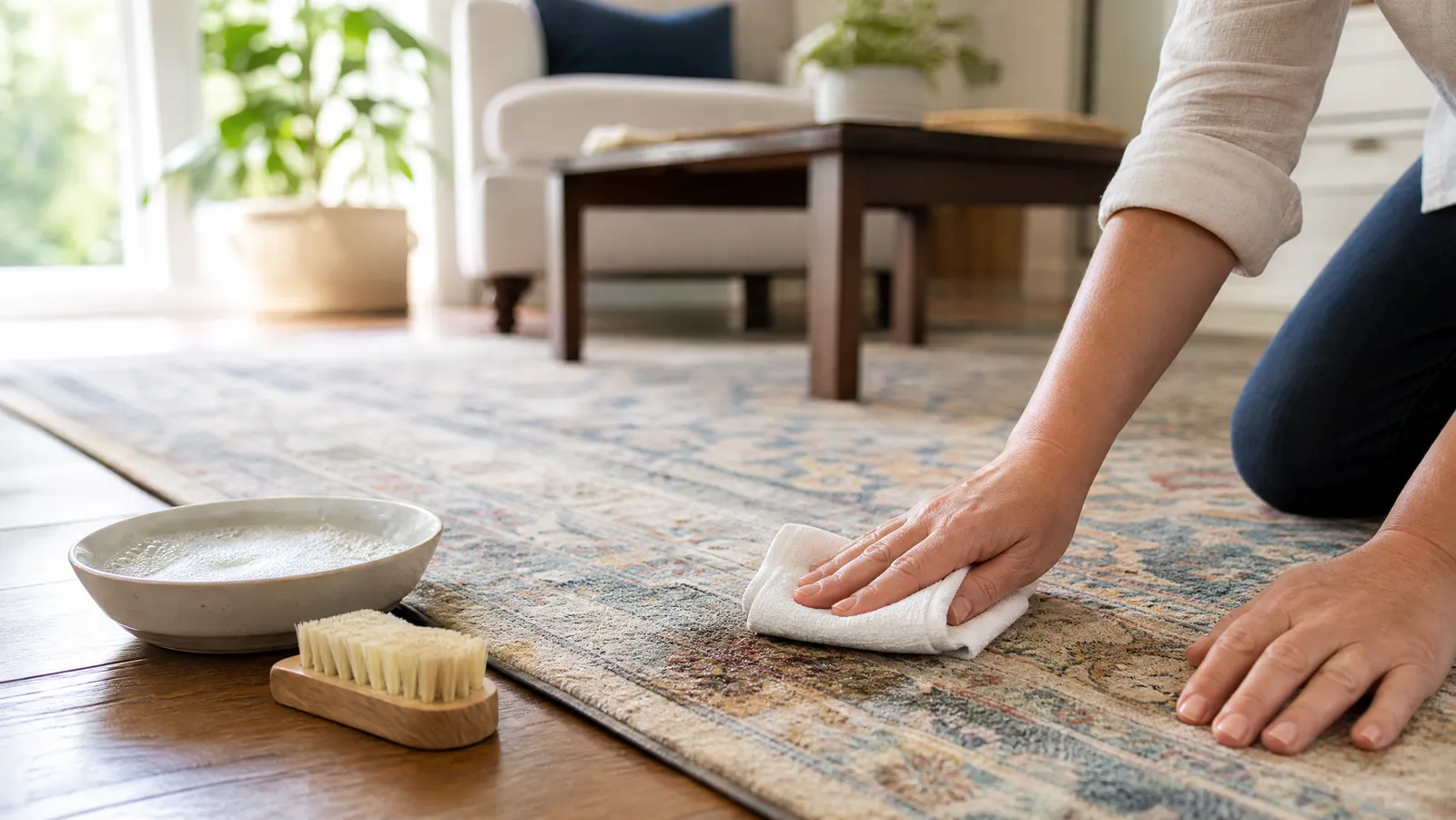
To clean an area rug, vacuum it weekly, blot spills immediately with a clean white cloth (blot, never rub), spot-treat with a few drops of mild dish soap in cool water, and deep clean once or twice a year — synthetics with a gentle shampoo, wool with cold water and a wool-safe detergent only.
That is the whole system in one paragraph. The rest is knowing which rules apply to your rug, because the method that revives a polypropylene rug can permanently felt a wool one. You already did the hard part of picking the right area rug; this guide is about protecting that decision with about ten minutes of maintenance a week and one honest deep-clean day a year. We will walk the routine in order: vacuuming, spot cleaning, at-home deep cleaning for synthetics, wool-specific care, drying and deodorizing, and when to hand the job to a professional.
The Quick Answer: A Cleaning Schedule for Every Area Rug
If you remember nothing else about how to clean an area rug, remember the schedule. Dirt does its damage between cleanings — grit settles into the pile and grinds against the fibers with every footstep — so cadence matters more than technique.
- Weekly: vacuum the rug, twice or three times a week in hallways and living rooms, daily with shedding pets.
- Immediately: blot any spill with a clean white cloth before it sets. Speed beats every cleaning product ever made.
- Monthly to quarterly: rotate the rug 180 degrees so traffic and sunlight wear it evenly, and vacuum the floor underneath.
- Once or twice a year: deep clean at home (synthetics) or refresh with baking soda (delicate fibers).
- Every 12 to 18 months: professional cleaning for most homes — more often with pets or allergies.
Everything below is that list, expanded with the numbers and cautions that keep you from wrecking the rug.
Know Your Fiber Before You Touch a Cleaner
The single most important fact about your rug is what it is made of, because fiber determines the safe cleaning method. Synthetics like polypropylene and polyester tolerate water and mild detergents. Wool is a protein fiber that hot water and harsh alkaline cleaners can permanently damage. Natural plant fibers like jute and sisal should barely get wet at all. We keep a full breakdown of how different rug materials handle cleaning if you are not sure what you own.
Check the care tag on the back corner of the rug first. It will tell you the fiber content and usually whether the rug is machine washable, spot-clean only, or professional-clean only. Treat that tag as the law. Everything in this guide assumes you have read it.
Routine Vacuuming: The Ten-Minute Habit That Saves Your Rug
Vacuuming is unglamorous, and it is also the highest-value thing you will ever do for a rug. Most cleaning pros put the baseline at once a week for low-traffic rooms and two to three times a week for high-traffic zones like entryways and living rooms — daily if you have a heavy-shedding dog or cat. The point is not appearance; it is pulling out the abrasive grit before foot traffic grinds it through the pile.
Three cautions keep the vacuum from becoming the problem:
- Turn off the beater bar on delicate weaves. Loop-pile, flatweave, shag, and wool rugs can fuzz, snag, or shed under a spinning brush roll. Use suction only, or raise the vacuum to its highest height setting.
- Never run the vacuum over fringe. Fringe wraps around the brush roll and tears. According to Consumer Reports, if you want to clean fringe, use the attachment nozzle covered with an old nylon stocking so the tassels cannot be sucked in.
- Flip and vacuum the back once a season. Fine soil migrates through the rug and collects underneath; vacuuming the back and the floor below it keeps that grit from working upward.
While you are down there, rotate the rug 180 degrees every few months. Traffic lanes and window sun both wear rugs unevenly, and rotation spreads the load.
Spot Cleaning a Rug: Blot, Never Rub
Spot cleaning is where most rugs get ruined, and the fatal move is always the same: scrubbing. According to Consumer Reports, you should blot liquid spills immediately with a clean white cloth — do not rub, because rubbing damages the fibers. Rubbing also pushes the spill deeper into the pile and spreads it outward.
Here is the sequence we use for nearly any fresh spill:
- Blot first. Press a clean white cloth or paper towel straight down onto the spill and let it absorb. Repeat with dry sections of cloth until almost nothing transfers. For solids, scrape gently with a spoon before blotting.
- Work from the outside in. Always treat the outer edge of the spot first and move toward the center, so you shrink the stain instead of spreading it.
- Mix a mild cleaner. A few drops of mild dish soap in about two cups of cool water handles most food and drink spills. Skip anything labeled heavy-duty, oxygenated, or bleach-based.
- Test on a hidden corner. Dab your solution on an out-of-the-way spot and blot with a white cloth. If any dye transfers, stop — that rug needs a professional.
- Dab, rinse, blot dry. Apply the solution with a cloth or sponge, blot it up, then dab with plain water to rinse out the soap and blot again until the area is barely damp. Leftover soap residue attracts dirt and creates a gray shadow later.
Stubborn spots may take two or three rounds. Let the area dry fully before you judge the result — a damp spot always looks worse than it is.
Pet Accidents Need an Enzyme Cleaner
Urine, vomit, and other organic messes are a different chemistry problem. After blotting up as much as you can, treat the spot with an enzyme cleaner, which breaks down the odor-causing compounds instead of masking them; most labels call for a dwell time of at least 10 to 15 minutes before blotting. Skip ammonia-based cleaners entirely — pet-care experts warn that ammonia smells like urine to a pet and can draw them back to re-mark the same spot. If accidents are a weekly reality rather than a rare event, it is worth reading our roundup of the best area rugs for pets, because low-pile, washable, and stain-resistant rugs turn this whole section into a non-issue.
How to Deep Clean a Rug at Home (Synthetic Fibers)
Once or twice a year, a synthetic rug — polypropylene, polyester, or nylon — benefits from a true wash to pull out the fine, oily soil that vacuuming cannot reach. This is a driveway-or-patio job on a warm, dry day, because the rug must dry fast and completely.
- Vacuum both sides, then take the rug outside and hang it over a railing. Beat the back with a broom to knock out embedded dust.
- Test your cleaner on a hidden corner: a squirt of mild dish soap or a capful of gentle rug shampoo in a bucket of cool water. Wait a few minutes and blot with a white cloth to confirm the dye holds.
- Wash in sections with a soft-bristle brush or sponge, working the suds along the pile — not against it — without soaking the rug through. The backing is the part that hates water most.
- Rinse until the water runs clear. A garden hose on gentle pressure works. Leftover detergent is sticky and will re-soil the rug within weeks, so rinse longer than feels necessary.
- Press out the water. Use a squeegee in the direction of the pile, or roll the rug and press. Do not wring or fold hard.
- Dry flat or draped, and dry completely — both sides — before it comes back indoors. Depending on thickness, allow a full day or two. A rug pad or floor under a damp rug is how mildew starts.
One honest aside: if your rug is labeled machine washable, you can skip nearly all of this — a cold, gentle cycle does the work for you. Whether that convenience is worth the trade-offs in feel and durability is exactly what we cover in whether washable area rugs are worth it.
How to Clean a Wool Rug Without Ruining It
Wool needs its own rules, because wool is a protein fiber — closer to your hair than to plastic. Heat, agitation, and alkaline chemistry are how wool sweaters get felted, and the same physics apply to a wool rug. Learning how to clean a wool rug mostly means learning restraint.
- Cold or cool water only. Hot water can shrink and felt wool and can set stains permanently.
- Wool-safe detergent only. According to This Old House, use a mild, wool-safe detergent made for delicate fabrics, and avoid regular laundry detergents and bleach, which can damage the fibers and bleed the colors. Harsh alkaline cleaners and ammonia are off the table for the same reason.
- Damp, never soaked. Sponge your solution on a small section at a time, blot it up, rinse with a cloth dipped in clean cool water, and blot dry. Over-wetting wool invites shrinkage, browning, and mildew in the dense pile.
- Dry flat, out of the sun. This Old House notes that drying can take several hours to a full day, that both sides must dry completely, and that you should keep the rug away from direct heat sources and direct sunlight, which can cause shrinkage — and sun will fade the dyes besides. Lay it flat or drape it over two parallel rails, and point a fan at it.
- Vacuum gently, but regularly. This Old House recommends vacuuming a wool rug at least twice a month, more in high-traffic rooms — always with the beater bar off. Expect some shedding from a new wool rug for the first few months; that is normal, not damage.
If a wool rug takes a large spill, a pet accident that soaks through, or is simply an expensive or antique piece, stop at blotting and call a rug cleaner. Wool rewards patience and punishes improvisation.
Drying and Odor Removal
Much of the damage attributed to cleaning is really damage from drying — or the lack of it. A rug that goes back on the floor damp grows mildew between the backing and the floor, and you will smell it before you see it. Dry both sides completely, use fans or a dehumidifier to speed things up, and put your hand deep into the pile to confirm it is dry at the base, not just at the tips.
For odors without stains — the general mustiness a rug picks up over a season — plain baking soda is the cheapest fix that actually works. Sprinkle it evenly across the dry rug, let it sit, and vacuum it up. According to Arm & Hammer, about 15 minutes is enough for an everyday refresh, non-greasy stains need at least 3 hours, and the longer it sits — overnight is ideal — the more odor and oil it absorbs. We do a full overnight treatment on every rug about twice a year, timed with the seasonal rotation.
When to Call a Professional (and How Often)
Home care handles surface soil; it does not remove the fine grit and oils bound deep in the pile, and it should never be the plan for antique, silk, viscose, or hand-knotted rugs. According to Cleanville Carpet Care, most homes should have area rugs professionally cleaned every 12 to 18 months, tightening to every 6 to 12 months with heavy traffic or allergies and every 6 to 8 months for pet owners. For Oriental rugs specifically, Consumer Reports puts the interval at every one to three years, depending on household traffic.
Beyond the calendar, three signs say "professional, now": a stain you have treated twice that keeps reappearing, any odor that survives a baking-soda treatment, and any color bleed during your hidden-corner test. A proper rug washing costs a fraction of a quality rug and adds years to its life.
Common Mistakes That Ruin Rugs
Almost every rug we have seen destroyed died from one of these:
- Scrubbing a fresh spill. Rubbing frays the fiber tips and drives the stain into the backing. Blot, always.
- Over-wetting. A soaked rug dries slowly, and slow drying means mildew, browning, and a warped backing. Damp is the ceiling.
- Hot water on wool. Heat sets stains and felts the pile. Cold water, every time.
- Harsh chemicals. Bleach, ammonia, and heavy-duty carpet chemicals strip dye and damage natural fibers. Mild dish soap or a fiber-appropriate cleaner covers the vast majority of household messes.
- Machine-washing a rug that is not washable. If the care tag does not say machine washable, the washer will destroy the backing, the binding, or both — and possibly the machine.
- Skipping the colorfast test. Thirty seconds on a hidden corner is the difference between a clean rug and a blotched one.
- Vacuuming the fringe. It snags, tears, and unravels. Nozzle and nylon stocking, or leave it alone.
- Returning a damp rug to the floor. Dry it completely, both sides, before it goes back down.
The Takeaway
Cleaning an area rug is a schedule, not an event: vacuum weekly with the beater bar matched to the weave, blot spills the minute they happen, deep clean synthetics at home once or twice a year, keep wool cold and barely damp, and book a professional every 12 to 18 months. Do that, and a good rug will outlast the sofa sitting on it.
And if the rug you are nursing along is honestly the wrong size, fiber, or construction for the room it lives in, the better investment is a rug that fits your life — start with Voguish Home Design's area rug guide and buy once, correctly. Your future self, sponge in hand, will thank you.
The Author
About the author
Interior Designer
Donald Martin
Designer since 2006 and a lifelong lover of rescued objects, Donald Martin knows how to give a second life to pieces and weave them into an eclectic, personalized interior. He writes about decorating real homes on a real budget.