Floor Lamps · 12 min read
Are Floor Lamps Out of Style? What Looks Current in 2026
 Donald Martin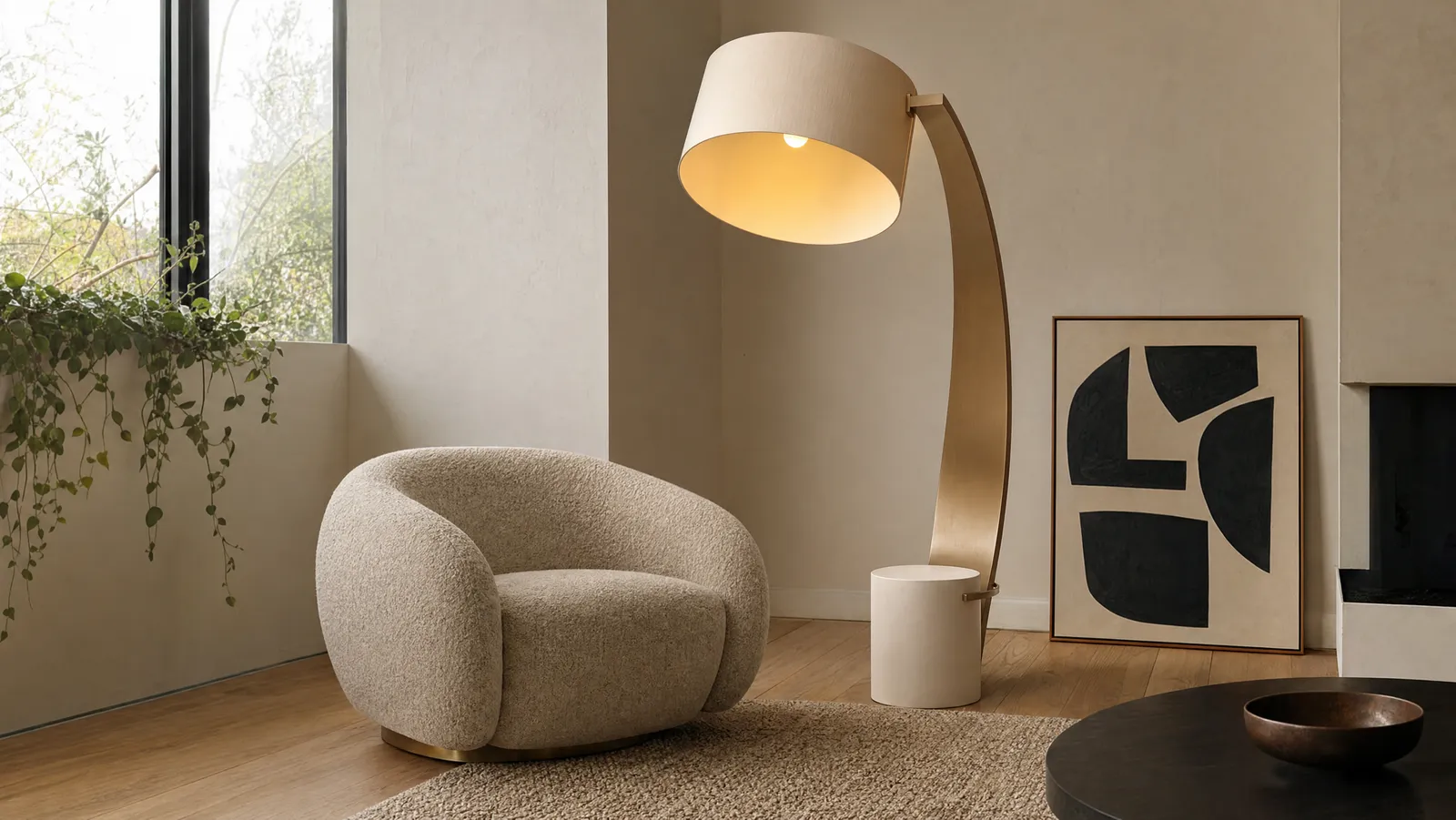
No. Floor lamps are not out of style, and the 2026 versions are bigger and more sculptural than the ones they replace. What dates a room is a short, specific list: the cheap halogen torchiere, shiny plated brass, a small shade on a thin pole, and lamps bought in matched pairs. Fix those and the category is fine.
The Short Answer
When people ask whether floor lamps are out of style, they are almost always looking at one lamp and generalizing from it. Usually it is a 1990s torchiere, or a slim nickel pole with a six-inch shade that came in a three-piece set. Those two objects are dated. The category is not.
The reason is structural rather than fashionable. A floor lamp adds a light source without touching the wiring, and it is one of the easiest ways to put light at seated height instead of on the ceiling. Design publications keep pushing in that direction: according to Arteriors' 2026 home lighting guide, every room should have at least three distinct light sources spanning ambient, task, and accent functions, controlled independently and set at varying heights rather than leaning on one overhead fixture — and a floor lamp is usually the easiest layer to add.
So the useful question is not whether to own one. It is which shape, which finish, and which shade. If you are starting from scratch, work through Voguish Home Design's floor lamp buyer’s guide first and treat this article as the style filter you apply afterward.
What Floor Lamps Are in Style Now
Three things changed at once: scale went up, finishes got warmer and duller, and shades stopped being an afterthought.
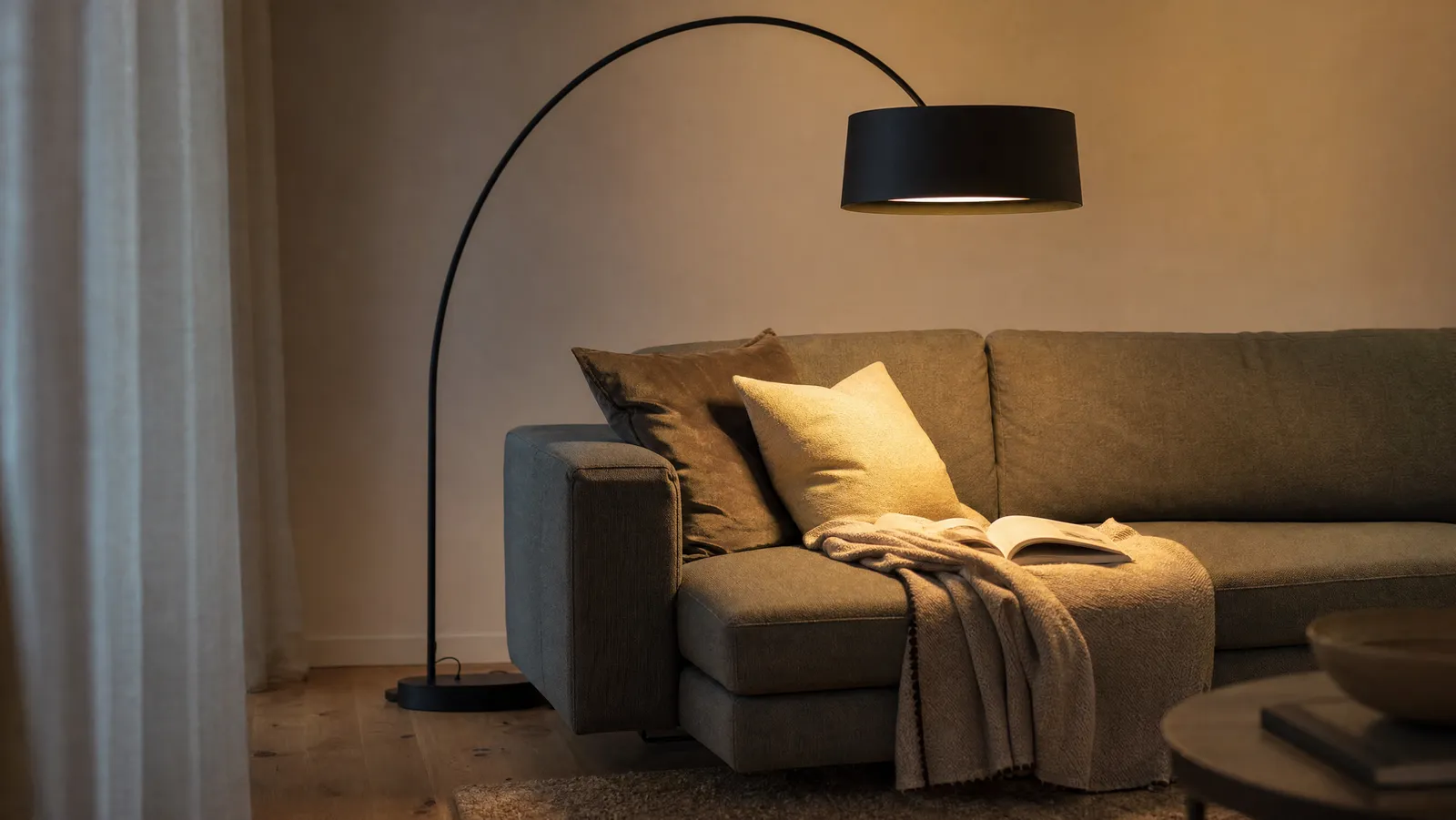
Scale and silhouette. Homedit's 2026 floor lamp roundup describes lamps moving out of the corner and into the room, with "oversized industrial arms, carved wood frames, stacked fabric forms, and ultra-thin metal silhouettes" that are "replacing the safe shaded lamps that used to disappear into corners," and fixtures large enough to "anchor entire seating layouts instead of sitting quietly in corners." Worth noting that the same roundup runs both ways on geometry — sharp angular framing and cone shades sit alongside globes, frosted domes and rounded forms — so the trend is scale and presence, not one silhouette. That is the single biggest tell. A current floor lamp is a piece of furniture. A dated one is an accessory.
Materials. Homedit's list runs to raw wood, brass, smoked metal, woven textures, exposed bulbs, rope-wrapped bases, live-edge wood, and frosted dome glass used in place of fabric.
Shades. Fenchel Shades' 2026 lampshade report describes "a massive surge in paper lamp shades and natural textiles, like crinkled washi paper, rough jute, and breezy linens," and says drum shades are now "taller and more slender than their predecessors," acting as vertical columns of light. For floor lamps specifically it names oversized arcs and slim columns as the shapes of the moment.
Our read: the common thread is mass plus softness. Something with real visual weight at the base or the shade, diffusing rather than glaring. If you want to see how each silhouette actually behaves, we compared the main floor lamp types and where each one throws light separately. The arc lamp is the one most likely to date you by execution rather than style, because a thin arm over a light base reads cheap no matter the finish — the specifics of reach, clearance and base weight over a sofa are worth getting right before you buy one.
What Dates a Room
Not the lamp, usually. The combination.
- Shiny plated brass and high-polish chrome. Lighting New York's 2026 trend guide states plainly that "shiny, high-polish metals are slowly stepping aside," with brushed nickel giving way to warmer alternatives. A gleaming gold-tone pole is the fastest way to put a date stamp on a corner.
- A small shade on a thin pole. When the shade is narrower than about a third of the lamp's height, the lamp looks like a stick with a hat. This is proportion, not fashion, which is why it has looked wrong for 20 years and will keep looking wrong.
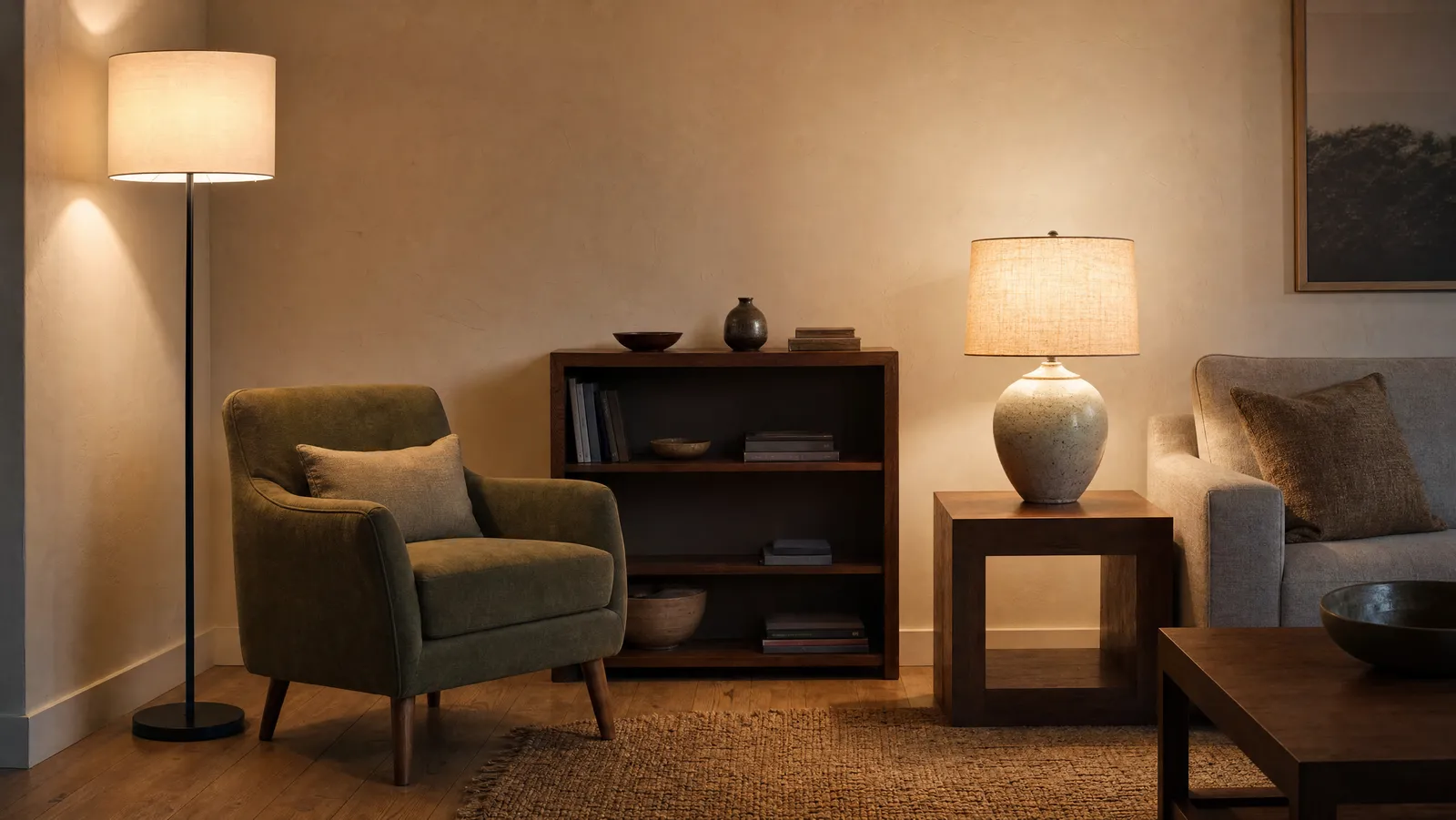
- Matched sets. The three-piece floor-plus-two-table-lamps box is the most reliable dated-room signal we see. It fights the layering logic in Arteriors' guide: identical fixtures at identical brightness flatten a room instead of giving it depth. Choose by function instead, which starts with deciding whether a given corner needs a floor lamp or a table lamp.
- Cool, blue-white bulbs. A 5000K bulb in a living room reads institutional. Lighting New York notes that most homeowners still prefer warm white in the 2700K to 3000K range "because it feels cozy and natural," and that lines up with how the EPA labels the scale: the ENERGY STAR light bulb purchasing checklist puts 2700K to 3000K in the "Warm White, Soft White" band and calls that the "standard color of incandescent bulbs."
- The plastic halogen torchiere. Its own section, below.
Are Torchiere Lamps Outdated?
The shape is not. The 1990s execution is, and there is a real safety record behind that.
Pointing light at the ceiling and letting it bounce back down is sound lighting practice, and it is still the cheapest way to add a whole layer of soft general light to a room with no overhead fixture. What collapsed was the specific product: a tall plastic-and-metal pole holding a 300 to 500 watt tubular halogen bulb in an open bowl.
According to the U.S. Consumer Product Safety Commission, a corrective action announced with the lighting industry in August 1997 covered roughly 40 million halogen torchiere floor lamps, and the agency said it knew of at least 189 fires and 11 deaths since 1992 involving them. CPSC noted that tubular halogen bulbs operate at temperatures much hotter than regular bulbs, that a revised UL standard effective February 5, 1997 required a glass or wire guard over the bulb, and that consumers should use only halogen bulbs of 300 watts or less for a guard to be effective. The lamps had been sold in the United States since 1983.
That is the reason the category acquired a reputation, and it is why we would not buy a secondhand halogen torchiere at any price. An LED torchiere is a different object: LEDs still generate heat, but not the bulb-surface temperatures that made halogen torchieres a fire risk in the first place. If you like the uplight principle, buy it with an integrated LED array or a socket you can put an LED bulb in, and look for a wide, heavy base rather than a three-legged plastic foot.
Floor Lamp Finishes Trending in 2026
Warm, matte, and slightly imperfect. Lighting New York's 2026 guide lists aged brass described as "more matte, less shine," champagne bronze, warm pewter as an alternative to brushed nickel, and soft gold, and says designers are choosing finishes that look "hand-brushed, weathered, and subtle."
Black has not left, but it has softened. The same guide names blackened bronze, charcoal, soft iron, and graphite as the replacements for pure matte black, which reads flatter in a room than it does in a product photo.
For shades and diffusers, Lighting New York points to opal glass, fabric, clouded resin, and textured glass, plus hammered metal, ribbed glass, pleated fabric, and reeded or fluted detail. Our own shortlist for a floor lamp, in order of how forgiving it is:
- Linen or paper drum. Hides nothing, flatters everything, costs the least to replace.
- Aged or antique brass with a fabric shade. The safest buy in the category right now, and it does not fight wood tones.
- Opal or frosted glass globe. Good when the lamp sits in your sightline, because the diffuser is the whole point.
- Blackened bronze or graphite. Use it when the room already has warm metal elsewhere and you want contrast rather than more gold.
Skip anything described as polished gold-tone, and be skeptical of a finish that photographs as mirror-bright.
How to Make a Dated Lamp Look Current
Most lamps are not the problem. The shade and the bulb are, and both are cheap to change.
Swap the shade, and go bigger. A taller, wider drum in linen or paper fixes the stick-with-a-hat proportion immediately and costs a fraction of a new lamp. Check the fitter type before you buy: a spider fitter needs a harp, a UNO fitter screws to the socket, and they are not interchangeable.
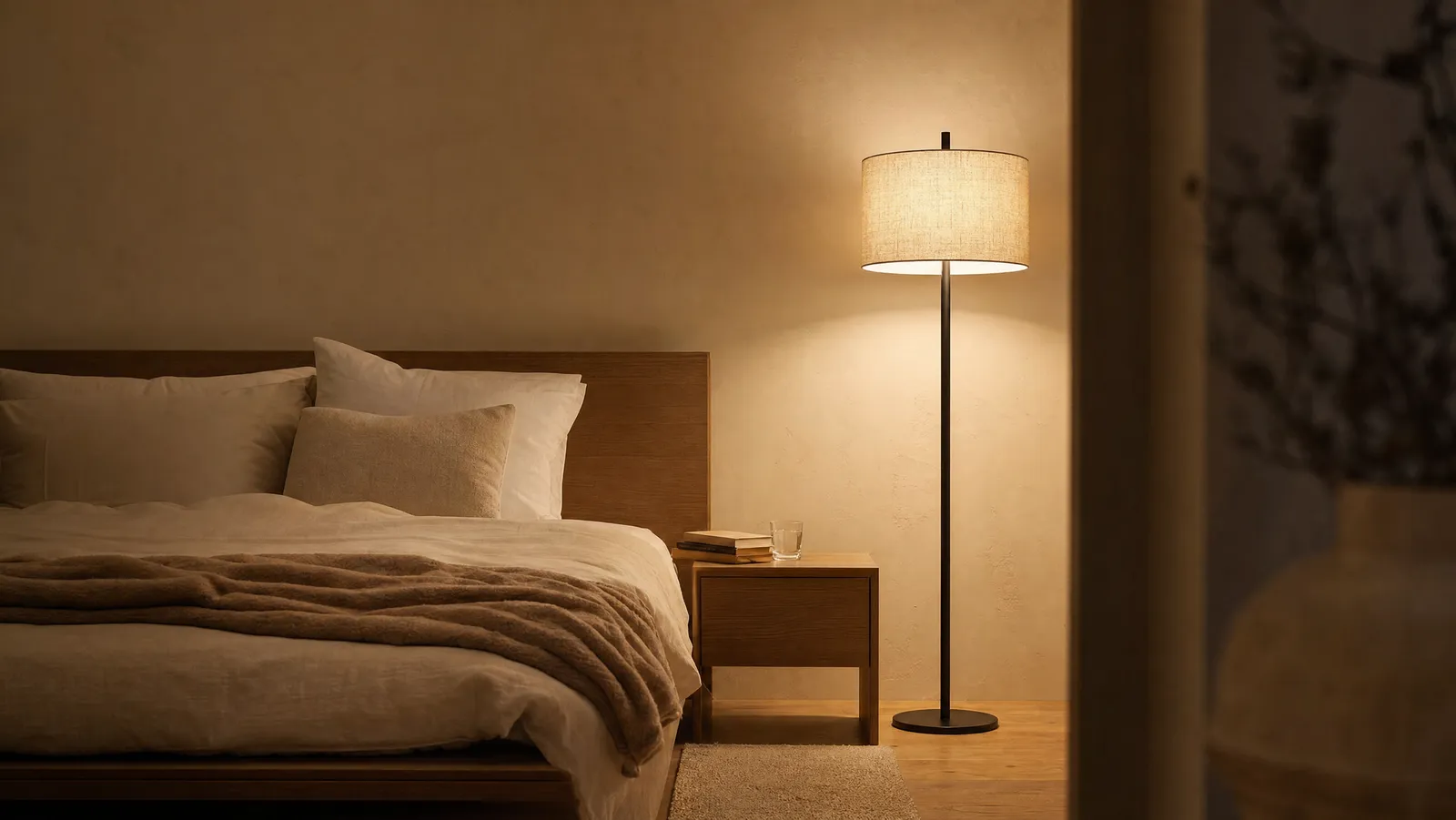
Swap the bulb for warm, high-CRI LED. Two numbers matter. Color temperature sets the mood; color rendering sets whether your rug still looks like your rug. According to the U.S. Energy Information Administration, the ENERGY STAR specification requires a CRI of at least 80, and ENERGY STAR requires color temperature between 2750K and 6500K. The same analysis puts traditional incandescent bulbs at 13 to 18 lumens per watt and noted, as of 2014, that several manufacturers had released ENERGY STAR qualified bulbs surpassing 100 lumens per watt. In plain terms: you can now get the light of an old 100 watt bulb for well under 20 watts, so there is no output reason to keep an incandescent in a floor lamp.
Add a dimmer. Even a plug-in or in-line dimmer changes how a room reads at night. Harvard Health reports that blue light at night suppresses melatonin more powerfully than any other light, that in one Harvard experiment 6.5 hours of blue light shifted circadian rhythms about twice as much as green light of comparable brightness, and that even roughly 8 lux can have an effect. That is not a promise about your sleep, and a lamp is not a medical device. It is a reasonable argument for being able to turn the light down in the evening instead of running one brightness all day.
Move it. A lamp that reads dated in the middle of a wall often reads intentional beside a chair, where it has a job.
What Actually Lasts
Buy on proportion and light quality and you will not have to ask this question again in five years.
Proportion first. Our rule of thumb: the shade should be wide enough to look like it belongs to the base, and the bottom of the shade should sit near seated eye level so you see light, not the bulb. Get that right and the finish is almost a free choice.
Then build quality, which is mostly weight and wiring. A wide, heavy base is what keeps a lamp from becoming a hazard with a dog or a toddler in the house, and it is also the thing cheap lamps cut. Look for a safety listing while you are at it. UL 153, the Standard for Safety for Portable Electric Luminaires, is the standard that covers cord-connected fixtures such as floor lamps, with requirements spanning electrical safety, thermal performance, mechanical stability, and material flammability. An ETL mark is not a lesser mark: according to a certifications explainer from Light Corp, the ETL Listed mark is "proof of product electrical compliance to North American safety standards." Both marks come out of OSHA's Nationally Recognized Testing Laboratory program, which recognizes Intertek — the lab behind ETL — and UL on the same footing.
Trend-proofing, in one line: a heavy base, honest materials, a generous shade, and a warm dimmable bulb has never looked dated and is not about to start.
Frequently Asked Questions
What are the most modern floor lamp styles?
Oversized sculptural lamps, slim tall columns, and arcs. Homedit's 2026 roundup frames the shift as floor lamps acting as "furniture, sculpture, and architectural structure at the same time." Its examples run from sharp angular framing to globes and frosted domes, so the common thread is scale and sculptural presence rather than any single geometry. Fenchel Shades names oversized arcs and slim columns specifically for floor lamps.
Is brass still in style for floor lamps?
Yes, but only the matte kind. Lighting New York's 2026 guide lists aged brass as a leading finish and describes it as "more matte, less shine," while noting that high-polish metals are stepping aside. Antique, aged, and unlacquered brass read current. Bright plated gold-tone does not.
Should your floor lamp match your table lamps?
We would not match them. Arteriors' lighting guide argues for layering light from multiple sources at different heights, and identical fixtures work against that. Match the metal family if you want cohesion, then vary the shape and the height.
Does an LED floor lamp look cheaper than one with an incandescent bulb?
Not if you buy the right bulb. The complaint is almost always about color, not about LED itself. Choose 2700K to 3000K, the band ENERGY STAR labels "warm white, soft white" and calls the standard color of incandescent bulbs, and a CRI of 80 or higher, which is the ENERGY STAR minimum per EIA. Make it dimmable and most people cannot tell.
Can a floor lamp replace a ceiling light?
For general light in a small or medium room, often yes, and an uplight is the usual way to do it. It is a layering decision more than a wattage decision, which is why Arteriors' guide treats ambient, task, and accent light as separate jobs. One lamp doing all three is asking a lot.
What We Would Do
Keep the floor lamp. Change the specifics. For a living room we would buy one large, heavy, aged-brass or blackened-bronze lamp with a generous linen or paper shade, put a dimmable 2700K bulb in it at CRI 80 or better, and place it beside the seat that gets used most. Then we would stop there rather than adding a matching pair.
The lamps that look dated in 2026 are dated for reasons you can name: a halogen-era torchiere with a safety record, a mirror-bright plated finish, a shade too small for its pole. None of those is the category's fault. If you would rather work the decision from the specs up than from the trends down, our guide to choosing a floor lamp that lasts covers height, output, and switching in order.
The Author
About the author
Interior Designer
Donald Martin
Designer since 2006 and a lifelong lover of rescued objects, Donald Martin knows how to give a second life to pieces and weave them into an eclectic, personalized interior. He writes about decorating real homes on a real budget.